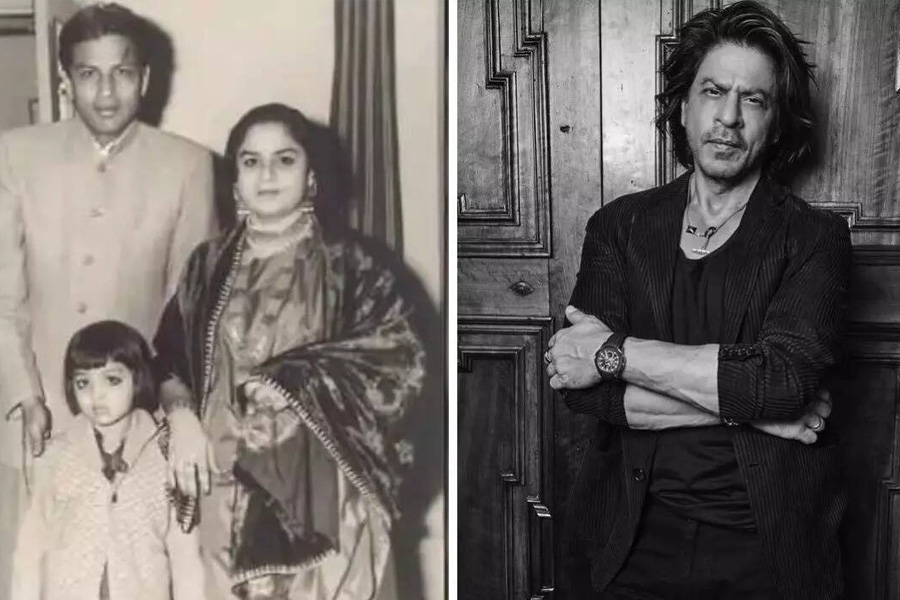
I write this as someone tracing the outline of a life that exists mostly in stories, in the margins of a famous biography, and in the steady habits of a family that rose into the public eye. Meer Taj Mohammed Khan is not a household name in the way his son became one, yet his presence is a steady river that shaped a small constellation of lives. I want to paint him not as a full portrait with every precise color, because those records are sparse, but as a silhouette animated by dates, by relationships, and by the modest facts that endure.
Origins and early life
The family narrative placed him in an elder generation that experienced mid-20th-century instability and migration. He is involved in political currents, local conscience initiatives, and the calmer job of providing a home. I have anchor numbers: his son was born on 2 November 1965. When I plot that backward and forth, I can see life markers like a home in the late 1960s and 1970s, financial challenges of a middle class family rebuilding after regional turmoil, and the loss of a parent when a child was 14, which marks a terrible turning point around 1979
Family and personal relationships
Shah Rukh Khan – the son
Shah Rukh Khan grew into global stardom, but in my reading he carried, like a quiet coin, stories of his father. Shah Rukh was born in 1965 and has often referenced the influence of his parents in interviews and reflections. I imagine Meer Taj in household scenes: an argument over dinner, a lesson on work, a small business negotiation. Those domestic scenes are as consequential as any public office.
Lateef Fatima Khan – the spouse
Lateef Fatima Khan was Meer Taj Mohammed Khan’s partner in the project of family life. She is often presented in family recollections as steady and purposeful. In my view she belongs in the same frame as Meer Taj – not as an accessory but as a shaping force, someone whose presence made the household a place of instruction and resilience.
Shehnaz Lalarukh Khan – the sister
Shehnaz Lalarukh Khan is Shah Rukh Khan’s elder sister. She carries the quieter burdens of family memory. I picture her as someone who kept household continuity when tragedy struck, a human ledger of ties and vows that survive beyond public fame.
Meer Jan Muhammad Khan – the grandfather
Meer Jan Muhammad Khan appears in the family as an anchor generation before Meer Taj. I treat him as an origin point for family stories about migration, community standing, and values. He is the branch from which the family tree grows.
Aryan Khan – the grandson
Aryan Khan belongs to the generation that inherits public scrutiny. Born in 1997, Aryan represents the continuity of family lineage into the 21st century. For me he is a living reminder that the story of one man extends through grandchildren and into new cultural contexts.
Suhana Khan – the granddaughter
Suhana Khan, born in 2000, is another point on that line. She speaks to the family doing the ordinary work of growth – school, study, career decisions – while being watched.
Abram Khan – the youngest grandchild
Abram Khan, born in 2013, is the youngest thread in the tapestry. He is the reminder that family history is ongoing; a grandfather achieved presence through stories and vanished dates continues to exist in grandchildren born decades later.
Career and financial life
Meer Taj Mohammed Khan has no public office or accolades record. Instead, I find statements about activism and small business. He supported anti-colonial movements, according to family memories. These accounts map convictions rather than titles. The family was middle class after 1947, surviving on small businesses and home chores. My narrative uses numerals as boundary stones: a 1965 son, a father lost at 14, and a mother lost at 24. These dates record loss and responsibility.
Achievements and public memory
If achievement is measured in medals, there are few records. If achievement is measured in consequence, Meer Taj Mohammed Khan achieved a great deal. He fathered and shaped a child who would become a major cultural figure. He passed on habits, a moral compass, and a tone of voice that survived privations. That is an achievement of a different kind – quiet and structural.
Extended timeline
| Approximate year | Event |
|---|---|
| 1965 | Birth of Shah Rukh Khan on 2 November |
| ca. 1979 | Death of Meer Taj Mohammed Khan – son aged about 14 |
| ca. 1989 | Death of Lateef Fatima Khan – son aged about 24 |
| 1997 | Birth of grandson Aryan Khan |
| 2000 | Birth of granddaughter Suhana Khan |
| 2013 | Birth of youngest grandchild Abram Khan |
Numbers are anchors in a sea of narrative. I use them to orient rather than conclude.
How the family memory survives
Family memory is like a house with rooms that are sometimes sealed. I find stories told in interviews, in the way the children reference parental advice, and in the recurring motifs of duty and humility. The family has translated private grief into public grace, and I see the echoes in the children and grandchildren who move through public life with stories folded into their pockets.
FAQ
Who was Meer Taj Mohammed Khan?
I see him as a father, a partner, and a figure shaped by mid 20th century events. He is best known as the father of a globally recognized son, but in private accounts he was an ordinary man with political sympathies and the responsibilities of running a household. Dates that matter most are 1965, the birth year of his son, and the late 1970s when he passed away.
What were his main relationships?
His principal relationships were familial – a wife, children, siblings, and his own parents. The immediate family includes a spouse who helped hold the household together, a son who rose to international prominence, and a daughter who carried memories forward. Grandchildren born in 1997, 2000, and 2013 continue the lineage.
What was his career?
Public records do not show a long public career of offices or awards. He is described in family recollections as aligned with political movements of conscience and as involved in small businesses. His career, in the record I work from, reads more like the steady earning of a living than the accumulation of titles.
Are there exact birth and death dates for him?
Exact official birth and death dates are not consistently available in the material I used. What is most often cited is the context: his son was born in 1965 and was 14 when his father died, which places that death around 1979. Those numbers are the clearest temporal beacons we have.
How does his legacy affect the family today?
His legacy survives in character and in narrative. The children and grandchildren carry his imprint in private habits, in values that surface in interviews, and in the family cohesion that outlasts public attention. The legacy is less a single monument than a network of small practices that persist.
Where can one find more detailed records?
I would point to archival documents, local records, and family archives for definitive paperwork. For me the most reliable traces were the dates and family relationships that remain consistent across recollections.