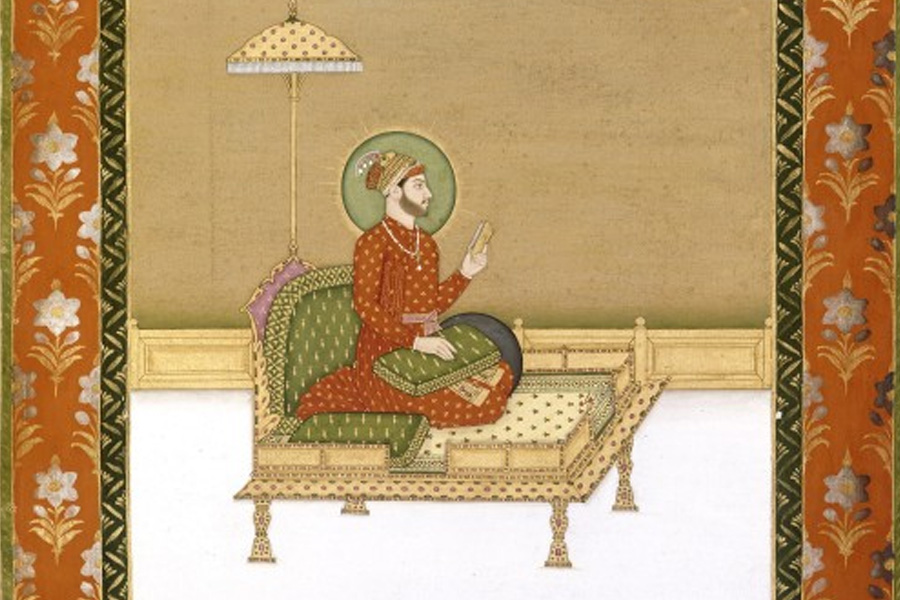
The Shadowed Life of Neku Siyar
When I look at the story of Neku Siyar, I see a life shaped more by confinement than by command. Born in 1679 into the vast and glittering Mughal dynasty, he carried royal blood yet lived much of his early life behind walls. His existence feels like a candle placed inside a lantern, visible but restrained.
He was the son of Muhammad Akbar, a rebellious prince, and Salima Banu Begum. His birth placed him in the direct current of imperial succession, but history would not grant him a smooth path. By 1681, at only about two years old, he was confined in Agra Fort, a child prisoner of dynastic politics.
His story is not one of continuous ascent. It is a story of interruption, delay, and brief ignition.
Royal Bloodlines and Deep Ancestry
Neku Siyar’s bloodline reflects Mughal supremacy. His grandfather was Aurangzeb, a famous Indian ruler. Shah Jahan and Mumtaz Mahal, regal names, were his great grandparents.
He also descends from Persian nobility through Mirza Badi-uz-Zaman Safavi. His Mughal-Safavid lineage gave him dignity and political significance.
His mother was also notable. He was related to Shah Jahan’s scholarly and tragic son Dara Shikoh through his mother. This dual inheritance placed Neku Siyar at the crossroads of two powerful but frequently conflicting Mughal ideals.
Parents and Their Influence
Muhammad Akbar
His father, Muhammad Akbar, was not just a prince but a rebel. He rose against Aurangzeb, failed, and fled into exile. That rebellion cast a long shadow over Neku Siyar’s life. It is not difficult to imagine how the son paid the price for the father’s defiance. Akbar’s death in 1706 did not restore stability to his children’s lives.
Salima Banu Begum
His mother, Salima Banu Begum, came from a refined and scholarly branch of the dynasty. As the daughter of Sulaiman Shikoh and granddaughter of Dara Shikoh, she embodied a gentler intellectual tradition within the Mughal court. Her influence likely shaped Neku Siyar’s education during confinement, where he received private tutoring.
Siblings and Immediate Family
Neku Siyar was not alone in his constrained upbringing. His siblings formed a small, tightly bound circle within the larger imperial family.
- Buland Akhtar
A brother who reportedly died in 1706 in the Deccan. His life, like Neku Siyar’s, was shaped by displacement and instability. - Safiyat-un-Nissa Begum
A sister known for accompanying their father during his flight. Her journey reflects resilience and loyalty under pressure. - Zakiyat-un-Nissa Begum
Less documented but part of the same enclosed familial world. - Raziyat-un-Nissa Begum
Another sister whose life remains largely in the shadows of history.
Some records suggest additional siblings, but the historical record is uneven. The family appears like a partially preserved fresco, with some faces vivid and others faded.
Extended Family and Cousins
The Mughal dynasty was vast, and Neku Siyar’s extended family stretched across multiple branches. According to traditional genealogical associations, his cousins included figures such as Bidar Bakht, Najib-un-Nisa Begum, Giti Ara Begum, Wala Shan, Ali Tabar, Sikandar Shan, Jawan Bakht, and Muhammad Akbar. These relationships reflect the dense web of Mughal kinship, where cousins could also be political allies or rivals.
Each of these individuals belonged to parallel lines descending from the same imperial ancestors. Their lives intersected in courts, campaigns, and succession struggles, forming a living network of ambition and survival.
Career and Administrative Roles
Despite his confinement, Neku Siyar did not remain entirely inactive. His early adulthood saw him assigned important provincial roles.
| Year | Position | Region |
|---|---|---|
| 1695 | Subahdar | Assam |
| 1702 | Subahdar | Sindh |
| 1707 | End of tenure | Transition period |
As Subahdar of Assam at around age sixteen, he held responsibility over a distant and complex province. Later, in Sindh, he governed another strategic region. These appointments suggest that even while politically constrained, he was still considered capable of administration.
Yet his career never stabilized. The Mughal system at the time was like a grand machine beginning to fracture, and Neku Siyar moved within its shifting gears.
The Brief Claim to the Throne
He had his most dramatic moment in 1719. On 19 May 1719, he was released and declared emperor at Agra Fort after decades of imprisonment.
He briefly held power.
His name appeared on coins. Declared authority. The sovereignty delusion appeared.
This did not last.
He was overthrown and imprisoned again in August 1719. His reign—if you can call it that—was lightning. Bright, startling, and gone quickly.
Financial Footprint and Material Evidence
Direct records of Neku Siyar’s personal wealth are scarce. However, one of the most tangible traces of his authority lies in coinage.
Silver rupees were issued in his name from the Akbarabad mint. These coins are now extremely rare. In the Mughal world, minting coins was more than economic activity. It was a declaration of legitimacy.
Through these coins, I see a brief assertion of identity. A statement that, however fleeting, he was recognized as sovereign.
Final Years in Confinement
After falling, Neku Siyar was captured again. His final years were in Delhi’s Salimgarh Fort.
He died April 12, 1723.
Despite his political turmoil, his burial at Khwaja Qutb ud din Kaki’s mausoleum links him to a spiritual tradition. His story seems to have migrated from court intrigue to hallowed ground.
Presence in Modern Memory
Neku Siyar does not dominate popular history, yet he appears in scattered corners of modern discussion. His name surfaces in numismatic circles, historical forums, and social media posts that highlight rare Mughal coins or forgotten rulers.
These mentions feel like echoes. Small but persistent reminders that his story, though brief in power, still resonates.
Timeline of Key Events
| Year | Event |
|---|---|
| 1679 | Birth of Neku Siyar |
| 1681 | Confinement in Agra Fort begins |
| 1695 | Appointed Subahdar of Assam |
| 1702 | Appointed Subahdar of Sindh |
| 1706 | Death of his father Muhammad Akbar |
| 1719 May | Proclaimed emperor at Agra |
| 1719 August | Deposed and imprisoned again |
| 1723 April 12 | Death in Salimgarh Fort |
FAQ
Who was Neku Siyar?
Neku Siyar was a Mughal prince born in 1679, the son of Muhammad Akbar and grandson of Aurangzeb. He briefly claimed the Mughal throne in 1719 before being deposed.
How was he related to Shah Jahan and Mumtaz Mahal?
He was their great grandson through his grandfather Aurangzeb and also connected through his maternal lineage linked to Dara Shikoh.
Did Neku Siyar rule as emperor?
He was proclaimed emperor in May 1719 and coins were minted in his name, but his rule lasted only a few months before he was removed from power.
What roles did he serve before becoming a claimant?
He served as Subahdar of Assam and later Sindh, holding administrative authority in these regions during his early adulthood.
Why was he imprisoned for so long?
His confinement was largely due to political tensions caused by his father’s rebellion against Aurangzeb, which made him a potential threat within the dynasty.
Are there physical artifacts linked to him today?
Yes, rare silver rupees minted in his name survive and are considered valuable historical artifacts.
Who were his closest family members?
His immediate family included his father Muhammad Akbar, his mother Salima Banu Begum, and siblings such as Buland Akhtar and Safiyat-un-Nissa Begum.