A Colonial Woman at the Center of History
I think of Margaret Kemble Gage as a woman standing at the edge of a storm, dressed in silk, listening to the thunder before the rest of the world heard it. Born in 1734 in New Brunswick, New Jersey, she came from a powerful colonial family and entered a marriage that placed her beside one of the most important British commanders in North America, Thomas Gage. Her life was not ordinary in any sense. It moved through New Jersey drawing rooms, Montreal government circles, New York society, and the tense atmosphere of Revolutionary America.
She lived in a world where family name mattered like gold. Her father, Peter Kemble, was a wealthy merchant and politician. Her mother, Gertrude Bayard, connected her to another deep colonial line. That marriage link placed Margaret inside a web of names that stretched across the Bayard, Van Cortlandt, de Lancey, and Van Rensselaer families. In other words, she was born into a family tree that looked less like a single trunk and more like a whole forest of power.
Her Marriage to Thomas Gage
Margaret married Thomas Gage on 8 December 1758 at Mount Kemble in New Jersey. That marriage shaped the rest of her life. Thomas Gage rose to become commander in chief of British forces in North America, and Margaret followed him into the upper ranks of imperial society. Their home became a place where military strategy, colonial politics, and private family life all pressed against one another like ships in a narrow harbor.
I see their marriage as both personal and political. Thomas was not just a husband. He was one of the central figures of British authority in the colonies. Margaret, by marrying him, became part of that world and also became exposed to its danger. She was a hostess, a wife, a mother, and a woman whose name would later be pulled into one of the most famous controversies of the American Revolution.
The Family She Built
Margaret and Thomas Gage had many children. Different documents list eleven children, but nine are usually retained. Children called Henry, Maria Theresa, Thomas, Louisa Elizabeth, John, Harriet, Charlotte Margaret, Emily, and William Hall Gage are prevalent.
Henry Gage became 3rd Viscount. He carried the family title and moved among British aristocracy, where inheritance and rank were set in stone. Maria Theresa Gage married Sir James Gregan-Craufurd and had Jane, Thomas Gage, Alexander Charles, and Sir George William Craufurd. Margaret’s descendants continued her military and land ties.
Thomas Gage, another son, is less detailed in family archives than Henry or John, but his role is nonetheless important. Louisa Elizabeth Gage married Sir James Henry Blake and had many children. John Gage married Mary Milbanke and had Charlotte Margaret, Thomas Wentworth, Louisa Henrietta, and Sophia Matilda. Unmarried Harriet Gage is remembered. Charlotte Margaret Gage married Admiral Sir Charles Ogle and had further children. Eight children were born to Emily Gage and Montagu Bertie, 5th Earl of Abingdon. Admiral William Hall Gage never married.
The peculiar power of Margaret’s family extended beyond her. It branched into titles, marriages, military service, and inherited influence like a river delta. Her descendants influenced politics, navy, and nobility.
Peter Kemble and Gertrude Bayard
Her parents shaped her world before Thomas Gage arrives. Pete Kemble was more than a private father. Public figure, wealthy merchant, and New Jersey political leader. He was a colonial aristocracy man from Mount Kemble. Margaret inherited another major line from Gertrude Bayard, connecting her to several prominent local families.
Margaret did not marry into power, thus this matters. It was her birthright. She learned colonial society’s rules—who mattered, spoke authoritatively, hosted, deferred, and watched carefully. She was prepared for her role in Montreal, New York, and Boston households by this background.
The Spy Question and the Weight of Legend
Margaret Kemble Gage is often remembered for one dramatic possibility: that she warned Joseph Warren about the British march before the battles of Lexington and Concord. This claim has followed her for generations like a ghost in the hallway. It is famous, enduring, and deeply contested.
I think the power of the story comes from how neatly it fits the drama of the Revolution. A woman from a Patriot family married to a British general, living at the center of imperial power, allegedly leaking information at the decisive moment. It has the shape of a novel. But history is often messier than fiction. The evidence remains uncertain, and the story cannot be treated as settled fact.
What is certain is that Margaret lived at a point where loyalty, marriage, and family divided the colonies from within. Her life became a mirror for revolutionary anxiety. People wanted clear heroes and villains, but Margaret stood in the gray space between.
Her Social Role and Public Presence
Margaret was never a military commander or officeholder, yet her historical significance is significant. She moved in power circles. She was known in Montreal and New York as a good hostess who could bring a difficult social world together with politeness, discussion, and presence. That work was important in the 18th century. Dinner tables may be strategic as little battlefields.
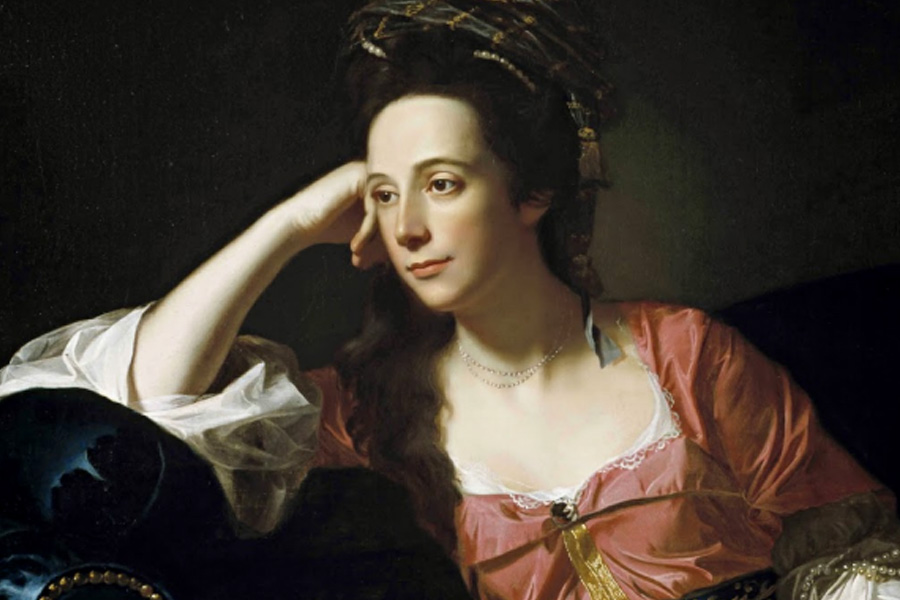
Her 1771 John Singleton Copley image also reflects her social status. Elegant and confident, she exudes great rank and sophisticated taste. Portraits like that were not random. These were claims. Status, identity, and belonging were declared.
Later Life and Death
When the Revolutionary crisis deepened, Margaret’s life changed. By the mid-1770s she had left North America and gone to England with her children. Thomas Gage followed later. Her later years remain less dramatic in the public imagination than her earlier ones, but they were part of the long tail of the Revolution, where families tried to rebuild ordinary life after political rupture.
She died in England on 9 February 1824. By then the world she had known as a young woman had vanished. The colonies had become a new nation, and the old social order had been cut and stitched into something else. Her name survived because it was tied to a turning point in history, but also because her family carried it forward.
FAQ
Who was Margaret Kemble Gage?
Margaret Kemble Gage was an American-born colonial woman, the wife of British General Thomas Gage, and a member of a prominent New Jersey family. She was born in 1734 and died in 1824.
Why is Margaret Kemble Gage remembered?
I would say she is remembered for three things: her marriage to Thomas Gage, her place within an elite colonial family network, and the long-running claim that she may have warned Joseph Warren about the British advance before Lexington and Concord.
Who were her parents?
Her father was Peter Kemble, a wealthy merchant and colonial political figure. Her mother was Gertrude Bayard.
How many children did she have?
The family is generally described as having eleven children, though nine are most commonly named in public records and genealogical summaries.
Was Margaret Kemble Gage a spy?
That claim is part of her legend, but it remains disputed. It is a famous theory, not a settled fact.
What makes her family important?
Her family connected several major colonial and British lines, including the Kemble, Bayard, Van Cortlandt, Gage, Craufurd, Blake, Ogle, and Bertie families. Through marriage and descendants, her lineage spread into military, aristocratic, and political circles.