A name that glows at the edge of American literary history
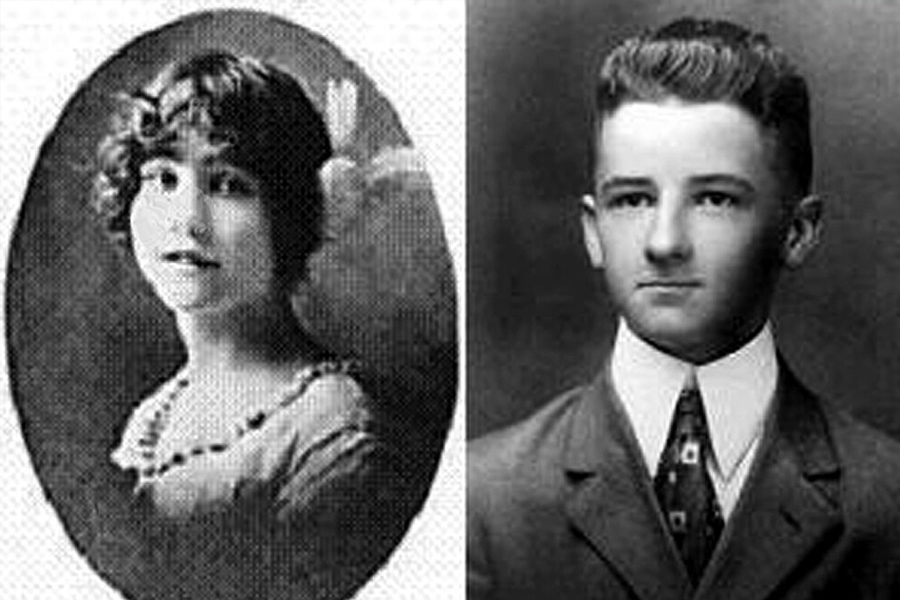
I think of Estelle Oldham as a figure standing in a doorway lit from behind. She is often remembered because of William Faulkner, yet that framing is too small for a woman whose life moved through family duty, marriage, heartbreak, art, and endurance. Estelle Oldham, later known as Estelle Oldham Faulkner, belonged to the world of early 20th century Mississippi, a place where lineage mattered, memory clung to people like heat, and private lives often carried more force than public records suggest.
Her story begins with a family already rooted in that Southern landscape. The names attached to her are not just labels. They are threads. Lemuel Oldham and Lida Oldham are part of the foundation of her identity, the first circle around her life. Later, William Faulkner becomes the most famous name connected to hers, and their marriage turns her into a central presence in one of the most studied literary lives in American history. Their daughter, Jill Faulkner, extends that line into another generation. In many ways, Estelle’s story is not one straight road but a house with many rooms, each one containing a different version of her.
Early life and background
Estelle Oldham was born in the late 19th century, with sources commonly placing her birth in 1897, though some accounts differ slightly. That small uncertainty matters less than the broader fact: she came of age in a period when the South was changing, but slowly, like river water widening around old stones. She grew up in a family environment shaped by social expectation, propriety, and the close ties of kinship.
Her parents, Lemuel Oldham and Lida Oldham, are important because they locate her within a particular domestic and social world. In the context of her time, parents were not just relatives. They were the architects of a child’s first obligations and the keepers of reputation. Estelle’s upbringing likely reflected the values of a respectable Southern household, where manners, family standing, and personal conduct carried weight. I see her early life as one that prepared her to navigate both visibility and restraint. She would later live in the shadow of a famous husband, but she had already been formed by a world that asked women to be both present and contained.
Family members and personal relationships
Lemuel Oldham
Lemuel Oldham was Estelle Oldham’s father, the first paternal authority in her life and one of the roots of her family identity. His role would have been shaped by the expectations of his time as provider, protector, and representative of the family in the wider community. For Estelle, he was part of the framework that defined her earliest years, before marriage and motherhood reorganized her world.
Lida Oldham
Lida Oldham was Estelle Oldham’s mother. A mother in that era often carried the invisible architecture of the home, maintaining the emotional and practical rhythm of family life. Lida would have been central to Estelle’s upbringing, especially in shaping habits of conduct, domestic understanding, and social awareness. Through Lida, Estelle inherited not only bloodline but also the intimate education of a daughter in a Southern household.
William Faulkner
William Faulkner was Estelle Oldham’s husband. Their relationship is one of the most consequential in her biography, not because it was simple, but because it was deeply human. Marriage to Faulkner linked her to literary history, but it also brought struggle, separation, reconciliation, and emotional complexity. He was a man whose inner life was famously intricate, and Estelle lived beside that complexity for decades.
Their marriage did not unfold like a polished portrait. It had the grain of real life. There was love, history, tension, and the persistent force of mutual knowledge. Faulkner’s career would become monumental, but Estelle remained connected to him not merely as a spouse in a caption. She was part of his private universe, the emotional weather system around which much of his adult life revolved.
Jill Faulkner
Jill Faulkner was Estelle Oldham’s child. As a daughter, Jill extended Estelle’s family story into the next generation, linking mother and child in a line of memory and inheritance. Children often carry the quieter echo of a parent’s life, and Jill’s presence in Estelle’s biography matters because it shows Estelle not only as wife or daughter, but as mother.
Motherhood adds another layer to her story. It shifts the focus from public association to daily intimacy. A child anchors a life in practical love, responsibility, and continuity. In Estelle’s case, Jill is part of the family structure that gives her biography warmth and dimension, not just historical outline.
Career, art, and work achievements
Although Estelle Oldham is not regarded as a career person, she did work and achieve. She wrote and painted. That matters. It suggests a mentality outside the home frame expected of many ladies her age.
I imagine her art as a curtained lamp. Despite not dominating the public scene, it shaped and illuminated her life. Paintings and later shows under her name reflect her artistic identity. That suggests she wasn’t just a supporting character. She had her own imagination.
Her financial biography rarely discusses personal wealth, corporate leadership, or public revenues. Family, marriage, and the economy of her time would have affected her finances. Finances were generally linked to household duties rather than career paths for women of her time. Her affiliation with Faulkner and the preservation of her paintings imply that her value goes beyond money. Some lives are measured by influence, memory, and legacy, not salary.
A life beside Faulkner
Having lived with William Faulkner meant being around intellect, ambition, pressure, and acclaim. That type of proximity can blur another person, but Estelle is visible because her life connected with his so strongly. She was his wife and had a personal life.
Their relationship is literary since Faulkner’s work dominates the room, but I don’t let that overshadow her. Marrying a great writer makes it hard to remove yourself from his mythos. Estelle’s name kept coming up, so she wasn’t background. Her presence in Faulkner’s life balanced his fame domestically and emotionally.
Extended timeline of Estelle Oldham’s life
1897
Estelle Oldham is born, with common references placing her birth in 1897.
Early 1900s
She grows up in Mississippi in a family shaped by Southern social expectations and close kinship ties.
Youth and early adulthood
She enters adulthood in an era when women’s roles were often circumscribed, yet her life also shows signs of artistic expression and personal depth.
Marriage to William Faulkner
She marries William Faulkner, linking her life to one of the major literary figures of the 20th century.
Family life
She becomes a mother to Jill Faulkner, adding another generation to the Oldham and Faulkner family line.
Later years
Her life continues alongside a complicated marriage and a public literary legacy that increasingly overshadows the private person she was.
1972
Estelle Oldham dies in 1972, closing a life that stretched across nearly the entire first three quarters of the 20th century.
Recent mentions and the afterlife of her name
Because Estelle Oldham lived in an earlier era, recent public mentions usually appear through historical writing, archival references, family history discussions, museum and literary contexts, and the continuing interest surrounding William Faulkner. Her name still surfaces because people keep returning to the human stories behind literary monuments. That is how memory works. It circles back, like water finding the same low ground.
Her legacy survives not through loud fame but through association, family history, and the persistent curiosity of readers who want to know who stood near greatness and what that life cost. In her case, the answer is not one thing but many things at once: daughter, wife, mother, artist, and a woman whose life was more textured than the simple frame around her.
FAQ
Who was Estelle Oldham?
Estelle Oldham was the wife of William Faulkner, the daughter of Lemuel Oldham and Lida Oldham, and the mother of Jill Faulkner. She is also associated with creative work as a writer and painter.
Why is Estelle Oldham important?
She matters because her life intersects with one of the most important literary figures in American history, but she also stands out as an individual with her own family story and artistic identity.
Who were Estelle Oldham’s family members?
Her immediate family members include her parents, Lemuel Oldham and Lida Oldham, her husband William Faulkner, and her child Jill Faulkner.
Did Estelle Oldham have a career of her own?
She is described in some accounts as a writer and painter. Her public career was not centered on business or politics, but she appears to have had her own artistic life.
What is known about her personal life?
Her personal life was shaped by family ties, marriage, motherhood, and the pressures of being connected to William Faulkner. Her story is both intimate and historically significant.
What makes Estelle Oldham’s life worth studying?
Her life reveals how family, marriage, art, and memory can overlap in one person’s biography. She is a reminder that history often hides its most interesting figures in the margins of more famous names.