I have always been drawn to small origin stories because they reveal how great arcs begin. This is one of those origin stories. It is the story of a woman who sang toward a horizon and whose work backstage opened doors onstage for a child who would become a cultural touchstone. Her name is Loretta Anne Williams. I write as someone who pieces together family shapes from scattered facts, impressions, and the living testimony of art.
Billy Dee Williams — The son who carried her music forward
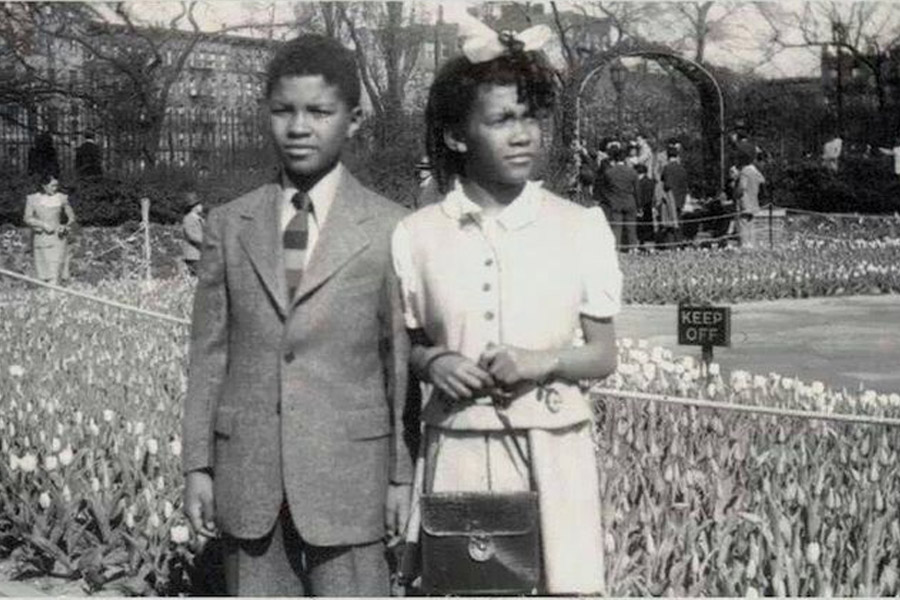
Billy was born on April 6, 1937. I picture him as a boy with a twin sister, taking small steps toward a theater door that their mother kept unlocked with encouragement. He became known to millions as an actor and painter, but I like to imagine him first as the child who sat in the wings while a mother hummed opera exercises. That early exposure matters: 1 mother, 2 children, countless possibilities. He learned cadence, posture, and the soft power of presence. Those early lessons translated into a career that spans stage, screen, and canvas. When I think of Loretta, I think of the quiet calibration she gave him. She taught audition etiquette without textbooks. She taught by being present where the work happened.
Roots in Montserrat
Loretta has a voice geography. 20th-century migration stories often include her or his family’s arrival in New York. Open vibrato is typical of island lungs loaded with sea air. I don’t know every address or year, but I believe in an immigrant sensibility that valued music, resilience, and the possibility to work on venues closed to her. Dates relate her to a century of transformation. She had a son around 1937. She worked along Broadway before 1945. I believe these coordinates.
Work at the Lyceum Theatre
She worked at a theater that is itself a character in New York history. At the Lyceum she was at the right place at the right time. I like to imagine an elevator ride that doubled as an audition line, a place where keys and kindness could open a path. Employment there was not glamorous in the payroll sense. It was practical and strategic. It provided proximity. It provided rhythm. For a mother who had studied opera and kept the craft alive in conversation, that proximity turned into opportunity for her children.
Immediate family
William December Williams Sr.
He is part of the family frame, a figure who anchored the household. I see him as a foil to Loretta’s public yearning. He provided stability and the kind of ordinary labor that made the extraordinary possible. Together they raised twins and navigated the grind of daily life.
Loretta Williams
The twin adds symmetry to the household memory. I envision two small children learning to sit still under stage lights, one following the other through a narrow door. Twins create echoes; they make family stories ripple in predictable ways. Her life is less documented, quieter in public records, but her presence shapes the family biography the same.
Corey Dee Williams
Corey represents the third generation. He carries forward the family name into late 20th century life and into film credits that map a lineage of craft. When I trace a line from Loretta to Corey I see a baton passed through portraiture, dialogue, and memory.
Hanako Williams
Hanako embodies the mingled threads of culture and personal history. She is a reminder that family stories gain color from marriages, travels, and the blending of traditions.
A small family table
| Name | Relation | Noted date or detail |
|---|---|---|
| Loretta Anne Williams | Matriarch | Opera studies, Lyceum employment |
| Billy Dee Williams | Son | Born April 6, 1937 |
| William December Williams Sr. | Father | Family anchor, mid 20th century |
| Loretta Williams | Twin sister | Twin sibling of Billy |
| Corey Dee Williams | Grandson | Active in later 20th century |
| Hanako Williams | Granddaughter | Part of extended family threads |
Tables are tidy fences. They keep facts in rows. They do not capture the music that runs between the lines.
Career and influence in human terms
I’m not just an archivist. As a listener, I write about family art. Loretta studied opera. That fact matters. Opera requires discipline, breath control, and narrative love. She may not have headlined, but she taught her son to play nuanced roles. I like counting the ways influence travels: exposure to rehearsal rooms, practical work that put kids in theatrical circulation, and her son’s refined demeanor. Years-based effect is generational. In scenes, it’s evident in 10, 20, and 40-year performances.
Money and vocation – what I can say
There is a natural hunger to convert talent into dollars, and families like this often translate cultural capital into financial stability slowly. I will not invent bank records. What I will say is this: family economies often rely on combinations of wage labor, gig opportunities, and the intangible value of reputation. Loretta’s toil in a theater staff role gave her children access. That access has an economic impact across decades even if it is not itemized in public filings. I prefer this arithmetic: 1 opportunity at an important moment equals many doors later. That is the simple math of legacy.
Timeline of key moments
- c. 1915 to 1925: probable birth window for the matriarch.
- April 6, 1937: birth of one son, an event that anchors the family timeline.
- Early 1940s to 1950s: steady work in Manhattan theaters.
- Mid 20th century: children raised in a household with a strong arts ethos.
- Late 20th century to present: descendants active in creative professions and private lives.
Dates are anchors. They are also maps that do not always show the terrain between waypoints.
FAQ
Who was Loretta Anne Williams in a sentence?
I would say she was a mother and an artist at heart who used her training and weekday employment to place her children into theater life.
What did she do professionally?
She studied opera and worked in a theater environment, in roles that put her in contact with performers and decision makers.
Who are her notable family members?
Her son is a widely recognized actor and painter. Her family includes a twin daughter, a father figure, and descendants who continued creative work.
Are there precise birth and death dates for her?
There are approximations and some differing records. What I depend on most are the firm dates tied to her children and the clear mid century time frame of her work.
Did she perform publicly?
Not in a way that produced large public records. Her performance life was more that of a trained singer who kept music present in family life and who worked near the stage.
How did she influence later generations?
She instilled craft, exposure, and a sense that theater was an available vocation. That inheritance is a kind of wealth that converts into roles and exhibitions over decades.