A woman I keep returning to in memory
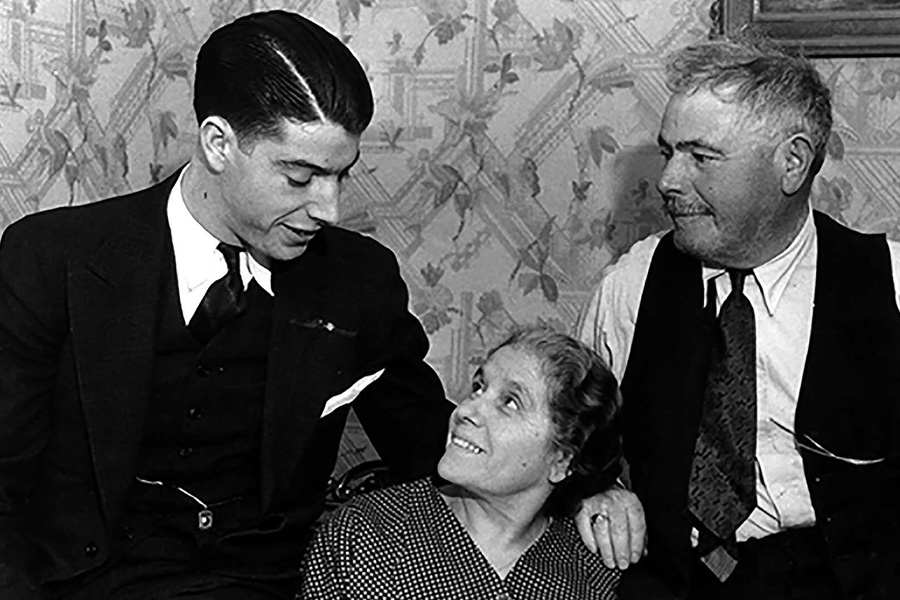
Rosalia Dimaggio is a family loom to me, not a footnote. A little kitchen, an Italian term whisk, and a mother weighing bread and discipline come to mind. Rosalia seems like a competent, soft-spoken teacher who was unusually stable in an immigrant environment. After arriving from Sicily at the end of the 1800s, she watched three of her sons become professional baseball stars in the 1920s and 1930s.
Family roots and the household engine
The family began with Giuseppe Paolo DiMaggio, a Sicilian fisherman who worked the waters and the docks. I write his name here plain but remember him as a man of the sea who expected steady labor and loyalty. The household he and Rosalia ran produced nine children across two decades, a rolling brood that required a manager who was firm and inventive. Rosalia organized meals, chores, lessons, and somehow coaxed baseball practice out of spare minutes. She was the quiet sponsor of youthful ambition.
Names that carried a city
The most famous of those children include
Joe DiMaggio
Dominic DiMaggio
Vincent DiMaggio
I have always seen Rosalia as a counterbalance to the practical restraint of the household. While Giuseppe favored the security of fishing and the sea, Rosalia quietly supported the boys on the sandlots. She folded uniforms and bandaged scraped knees. She also, according to family memory, shielded their practice from her husband’s disapproval. She did not make the headlines, but she handed them the bat.
The household by the numbers
I like numbers because they make a life feel concrete. Rosalia was born in 1878 and died in 1951. She and Giuseppe raised nine children. Among them were three sons who reached Major League Baseball: one born in 1912, one in 1914, and one in 1917. Those three dates mark not simply births but the start of an unusual family story in American sport.
| Item | Detail |
|---|---|
| Rosalia birth | February 5 1878 |
| Rosalia death | June 18 1951 |
| Number of children | 9 |
| Vince birth year | 1912 |
| Joe birth date | November 25 1914 |
| Dom birth year | 1917 |
How she shaped careers without a title
I picture Rosalia as a teacher who never gave up teaching. She instilled routine, practice, and pride. She is credited in family recollections with encouraging the boys to persist and with offering practical help. When Joe, Dom, and Vince began to gain notice at the neighborhood level, she made sure they had shoes that fit and time to practice between chores. Her achievement is not stamped in awards. It is visible in the arc of careers that started on local lots and rose into stadium lights.
Small talk about money and standing
Public memory limits my financial claims. Working-class family. Fishing supported Giuseppe. Rosalia managed the home. Their resources were limited until the boys succeeded. Later, that success changed the family balance and brought financial security, but Rosalia’s position remained domestic and formative. Her economic influence is easy to overlook. She gave the boys opportunities by keeping the home, organizing, and maximizing resources.
An extended timeline I return to
I often trace a life by its milestones. This timeline sketches the landmarks I think are most telling about Rosalia and her family.
- 1878: Rosalia is born in Sicily, an origin that carried language and custom into a new land.
- 1898 to 1905: Emigration and marriage period. The family establishes itself in California towns near the bay.
- 1912: Vincent is born. The household now includes multiple children and the rhythms of immigrant life.
- November 25 1914: Joe is born. This date later becomes a hinge for baseball history.
- 1917: Dominic is born. The household is full and energetic, a place where baseball practice becomes a family ritual.
- 1920s: The boys play neighborhood ball and draw notice for their talent. Rosalia supports their training quietly.
- 1930s: All three sons reach professional baseball at various times, bringing fame and new income to the family.
- 1951: Rosalia passes away. Her life spans a dramatic arc from Sicilian village to American baseball lore.
The flavor of family life
I like to imagine small details that names do not capture. Rosalia might have kept a ledger of birthdays. She probably measured flour and sugar with the same attention she applied to timetables. She translated between two cultures, and the translation was constant discipline. She created a micro culture in which hard work and steady practice could coexist with laughter and food and stubborn loyalty.
What the brothers said about her
I have read and re read the stories where the brothers recall their mother. They spoke of a resolute source of love and a constant presence in the household. They remembered the way she managed a crowd of children and still taught them respect for work. She was both soft and unyielding, a combination that shaped athletes who were intense and disciplined. The juxtaposition of a gentle teacher and a fierce protector is the kind of paradox that makes a life memorable.
FAQ
Who was Rosalia Dimaggio
I consider Rosalia the matriarch of a family that produced three Major League players. She was born in 1878 in Sicily and emigrated to the United States. She managed a large household and supported her sons as they moved from neighborhood fields to professional stadiums.
How many children did Rosalia have
Rosalia had nine children. Among them three sons are widely known in the history of baseball because they reached the major leagues in the 1930s and 1940s.
When were the famous sons born
Vincent was born in 1912. Joseph was born on November 25 1914. Dominic was born in 1917. Those years mark the continental shift from home to public life for the family.
What was her influence on her sons careers
I see her influence as foundational. She provided structure, encouragement, and the practical support that allowed the boys to pursue practice. She shielded their time to train and sustenance to play. Her influence was less public and more persistent.
Did she have a profession
Some recollections describe Rosalia as having been a teacher in earlier years. In the United States she primarily ran the household, which in its scale and necessity functioned as a full time responsibility.
When did Rosalia die
Rosalia died in 1951. Her life bridged two continents and several transformative decades in American history.